Skip to content
Commission Based vs Fixed Fee Ecommerce Agency in India
eCommerce Account Management

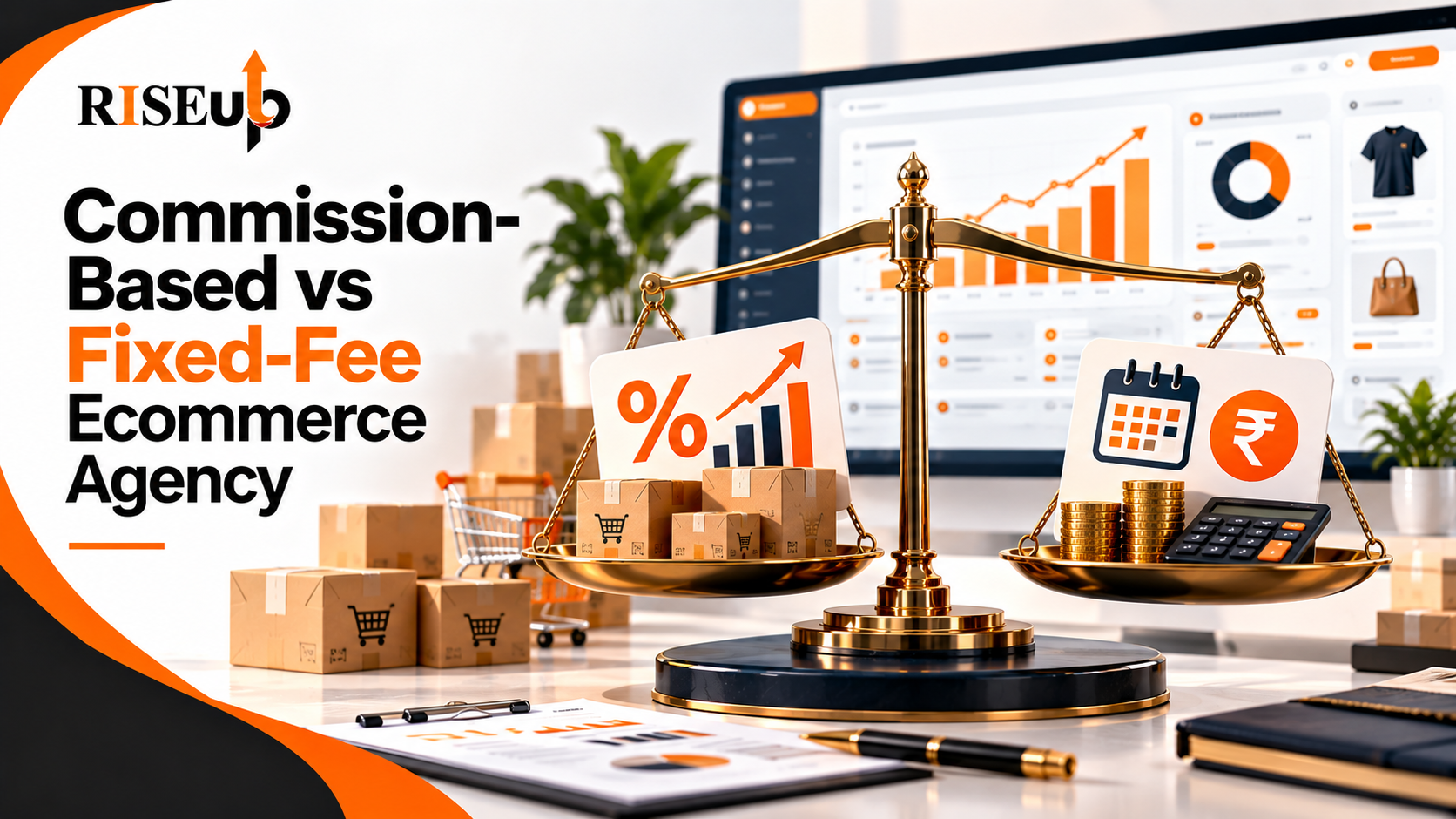
Commission-Based vs Fixed-Fee Ecommerce Agency: Which Is Better?

By Vivek Kumar, Founder & eCommerce Strategist · Published 30 Oct 2026 · Last updated 30 Oct 2026 · 11 min read

Commission-Based vs Fixed-Fee Ecommerce Agency: Which Is Better?

Compare commission-based vs fixed-fee ecommerce agencies in India. Understand pricing, costs, profit margins and which model suits your business.

Commission-Based vs Fixed-Fee Ecommerce Agency: Which Is Better?

Commission based vs fixed fee ecommerce agency is an important comparison for Indian brands and online sellers planning to outsource marketplace account management. While fixed-fee agencies charge a predetermined monthly amount, commission-based agencies calculate their fees using an agreed sales metric. Understanding the difference can help you compare costs, protect profit margins and choose the right pricing model for your business.

When hiring an ecommerce agency to manage Amazon, Flipkart, Meesho, Myntra or other marketplaces, sellers generally encounter different pricing arrangements. Some agencies charge a fixed monthly management fee, while others charge a percentage of sales. Some combine both models.

But which option is better for your business?

The answer depends on your current sales, product margins, marketplace expenses, advertising budget and the services you expect from the agency.

A fixed-fee model offers predictable monthly expenses, while a commission-based model connects the agency's fee to an agreed sales metric. Neither is automatically better. The right choice is the one that provides the required services without unnecessarily reducing your business profitability.

Let's compare both models, understand their costs and identify which one makes sense for different types of ecommerce sellers.

What Is a Fixed-Fee Ecommerce Agency?

A fixed-fee ecommerce agency charges a predetermined amount for managing your marketplace account or providing agreed services.

You pay the agreed fee regardless of whether your monthly sales increase or decrease.

For example, suppose an agency charges ₹20,000 per month for managing your marketplace account.

The agency fee remains unchanged, provided the service scope and contract remain the same.

What services can a fixed fee include?

Depending on the agreement, a fixed monthly package may include:

  • Seller account management.
  • Product listing creation and optimization.
  • Catalog management.
  • Marketplace advertising management.
  • Account health monitoring.
  • Inventory and order coordination.
  • Competitor research.
  • Performance reporting.
  • Marketplace operational support.

However, not every agency includes all these services in its fixed fee.

Some charge separately for product photography, graphic design, onboarding, additional marketplaces, advanced advertising or large catalog updates.

Advantages of a fixed-fee ecommerce agency

1. Predictable monthly expenses

You know the agency management cost in advance, making financial planning easier.

2. Better control over profit calculations

Since the management fee does not automatically increase with sales, you can calculate its impact on your margins more easily.

3. Suitable for established sellers

Businesses with consistent orders and stable marketplace operations may find fixed monthly pricing easier to manage.

4. Easier budget allocation

You can plan your marketplace expenses around a known management fee, advertising budget and operational costs.

Disadvantages of a fixed-fee ecommerce agency

1. Expenses continue even when sales decline

You must pay the agreed amount even if sales are lower than expected.

2. Agency incentives may not always match your growth targets

The agency receives the same management fee regardless of sales performance. Therefore, clear deliverables and performance reviews are important.

3. Limited flexibility in some packages

Some fixed-fee arrangements may have a defined service scope that requires additional payment when your business expands.

What Is a Commission-Based Ecommerce Agency?

A commission-based ecommerce agency charges a percentage of an agreed sales or revenue metric.

Instead of paying only a fixed monthly management fee, you pay the agency according to the commission structure defined in your contract.

For example, suppose an agency charges 5% commission on eligible monthly sales.

As eligible sales increase, the agency's fee also increases.

Important: Commission-based arrangements differ between providers. The commission may be calculated on gross sales, net sales, incremental sales or another agreed metric. Never assume that every agency uses the same calculation.

Advantages of a commission-based ecommerce agency

1. Lower initial management expenses may be possible

Some arrangements reduce the fixed monthly payment, which can be helpful for businesses with limited budgets.

2. Fees can be linked to business performance

The agency's compensation increases when the agreed sales metric increases.

3. May suit businesses testing a new marketplace

A seller entering a new marketplace may prefer a variable fee arrangement, depending on the contract and minimum charges.

4. Potentially flexible for seasonal businesses

Businesses with fluctuating sales may prefer a fee structure that changes with eligible sales rather than a consistently high fixed payment.

Disadvantages of a commission-based ecommerce agency

1. Agency costs increase with sales

As your marketplace business grows, the commission amount may become significantly higher.

2. Revenue does not equal profit

An agency may earn more commission when sales increase, even if the seller's contribution margin remains low.

3. Existing sales can create additional costs

If commission applies to all sales, you may pay the agency on orders that would have happened without its involvement.

4. Commission calculations can become complicated

Returns, cancellations, discounts, GST, advertising expenditure and marketplace deductions can create disagreements if the calculation is not documented clearly.


Want Expert Help with Your Seller Account?

Book a free consultation and let our team audit your marketplace presence.

Fixed-Fee vs Commission-Based Ecommerce Agency: Key Differences

Here is a direct comparison of both pricing models.

The most important difference is not simply how much you pay. It is how the agency fee changes as your business grows.

Practical Example: Which Pricing Model Costs Less?

Let's understand both models using a hypothetical Indian marketplace seller.

Suppose a brand sells products on Amazon and Flipkart and is comparing two agency proposals.

Agency A: Fixed-fee model

  • Monthly management fee: ₹20,000.
  • Advertising expenditure: Paid separately.
  • Other services: According to the agreed package.

Agency B: Commission-based model

  • Agency commission: 5% of eligible monthly sales.
  • No additional fixed management fee in this example.
  • Advertising expenditure: Paid separately.

Now compare the costs at different sales levels.

In this example:

  • At ₹2 lakh sales, commission-based pricing is cheaper.
  • At ₹4 lakh sales, both models cost the same.
  • Above ₹4 lakh sales, the fixed-fee model costs less.

This is a simplified illustration, not a market price benchmark or a recommendation for every business. Actual costs depend on the service scope, contract and commission calculation.

What happens when sales increase but profit margins are low?

Consider another example.

A seller generates ₹6 lakh in monthly sales with a 15% contribution margin before agency fees.

  • Contribution before agency fee: ₹90,000.
  • Fixed agency fee: ₹20,000.
  • Commission-based fee at 5% of sales: ₹30,000.

After deducting the agency fee:

This example excludes other business expenses not already reflected in the contribution margin.

It demonstrates why sellers should evaluate agency pricing against profitability rather than revenue alone.

What Is a Hybrid Ecommerce Agency Pricing Model?

A hybrid pricing model combines a fixed management fee with a variable commission or performance-linked payment.

For example:

  • Fixed monthly management fee: ₹10,000.
  • Commission: 2% of eligible sales.

If eligible monthly sales are ₹5 lakh:

  • Fixed fee: ₹10,000.
  • Commission: ₹10,000.
  • Total agency fee: ₹20,000.

This structure gives the agency a predictable base payment while providing additional compensation linked to the agreed performance metric.

Advantages of hybrid pricing

  • Shares some business-growth upside.
  • Provides a base payment for ongoing agency work.
  • May reduce the commission percentage compared with a fully variable model.
  • Can be structured around specific business objectives.

Disadvantages of hybrid pricing

  • Total fees can increase as sales grow.
  • Sellers need to track both fixed and variable components.
  • Poorly defined targets can create disagreements.
  • It may be more expensive than a fixed fee for high-volume sellers.

A hybrid model can be worth considering when both parties want a balance between predictable service costs and performance-linked compensation.

Which Ecommerce Agency Pricing Model Is Best for Your Business?

The best pricing structure depends on your business stage and marketplace performance.

1. New Sellers and Startups

Consider: A clearly scoped fixed-fee starter package or a carefully defined variable arrangement.

New sellers often have uncertain sales volumes. Before selecting a pricing model, calculate how much you can afford to spend on onboarding, listings, advertising and ongoing account management.

Avoid agreeing to a large commission on all sales without understanding how it will affect your margins.

2. Growing Marketplace Sellers

Consider: Fixed fee or hybrid pricing.

If your monthly sales are increasing, compare the cost of a fixed retainer with the commission payable at your expected sales level.

A hybrid arrangement may also work if the base fee and variable component are reasonable.

3. Established Brands with Consistent Sales

Consider: Fixed-fee pricing.

Established brands may benefit from predictable monthly expenses, especially when their marketplace operations and sales are relatively stable.

A fixed fee can also make it easier to calculate the financial impact of adding another marketplace.

4. Seasonal Product Businesses

Consider: A variable or hybrid arrangement, subject to contract terms.

Businesses selling festive products, seasonal fashion or products with fluctuating demand may prefer a fee structure that accounts for changes in sales.

However, confirm whether commissions are charged on discounted sales, repeat customers, returns or cancelled orders.

5. Multi-Marketplace Sellers

Consider: A fixed fee per marketplace or a customized hybrid arrangement.

Managing Amazon, Flipkart, Meesho, Myntra and other marketplaces involves different operational requirements.

The fee should reflect the actual workload, number of SKUs, advertising responsibilities and reporting requirements across platforms.

7 Hidden Costs to Check Before Hiring an Ecommerce Agency

The advertised agency fee does not always represent the complete cost of managing your marketplace account.

Before signing an agreement, check these additional expenses.

1. Marketplace Advertising Budget

Advertising expenditure is generally separate from the agency's management fee unless the agreement specifically states otherwise.

Ask whether the agency charges a separate PPC management fee.

2. GST on Agency Services

Check whether the quoted fee includes GST or whether applicable taxes are added separately.

3. Product Photography and Graphic Design

Some agencies include a limited number of creative assets, while others charge separately for product photography, infographics, banners and enhanced product content.

4. New Product Listing Charges

If your catalog expands, the agency may charge additional fees for creating new listings or managing additional SKUs.

5. Additional Marketplace Charges

Ask whether the agreed fee covers one marketplace or multiple platforms.

6. Onboarding and Setup Charges

Account audits, initial setup, catalog migration and onboarding activities may be billed separately.

7. Contract Exit and Handover Costs

Review notice periods, early termination charges and any additional handover requirements.

Tip: Request a complete written cost breakdown before accepting any proposal.

8. Questions to Ask Before Finalizing an Ecommerce Agency Pricing Model

Use these questions when comparing agency proposals.

  1. Is the agency fee fixed, commission-based or hybrid?
  2. If commission-based, is it calculated on gross sales or net sales?
  3. Are returns and cancellations deducted before commission calculation?
  4. Does the commission apply to all sales or only incremental sales?
  5. Is marketplace advertising expenditure included?
  6. Are GST and other taxes additional?
  7. What services are included in the monthly fee?
  8. Are additional marketplace accounts charged separately?
  9. What happens if monthly sales decline?
  10. Can the pricing structure be revised as the business grows?
  11. How frequently will the agency share performance reports?
  12. What are the contract duration and termination conditions?

These questions can prevent misunderstandings and help you compare proposals more accurately.

9. How to Calculate Whether an Ecommerce Agency Fee Is Profitable

Instead of comparing only the agency's monthly charge, calculate how much the service costs relative to your business contribution.

Use this simple formula:

You can also calculate the agency fee as a percentage of sales:

For example:

  • Monthly sales: ₹5,00,000.
  • Agency fee: ₹20,000.

The agency fee represents 4% of monthly sales in this example.

However, this percentage alone does not determine whether the agency is worth hiring.

You should also evaluate whether the agency is improving listing quality, advertising efficiency, account operations and contribution margins.

A lower fee does not necessarily mean better value if important services are missing.

How RiseUp Ecom Supports Marketplace Sellers

RiseUp Ecom provides marketplace account management and ecommerce growth services for Indian brands, manufacturers, wholesalers and online sellers.

Its marketplace services include:

  • Amazon account management.
  • Flipkart account management.
  • Meesho account management.
  • Myntra account management.
  • AJIO marketplace support.
  • Product listing and catalog optimization.
  • Marketplace advertising and PPC management.
  • Seller onboarding and account setup.
  • Account health and operational support.

Businesses can explore the available service plans and compare included services through the RiseUp Ecom Pricing Page.

You can also explore individual marketplace services:

The right service arrangement should depend on your catalog size, marketplace requirements, advertising needs and business goals.

Frequently Asked Questions

1. What is the difference between a commission-based and fixed-fee ecommerce agency?

A fixed-fee agency charges a predetermined amount for agreed services, while a commission-based agency charges a percentage of an agreed sales or revenue metric. Fixed pricing is more predictable, whereas commission-based pricing changes with the metric used.

2. Is a fixed-fee ecommerce agency better than a commission-based agency?

A fixed-fee agency may be better for established sellers with consistent sales who want predictable expenses. A commission-based model may suit businesses that prefer variable payments. The right option depends on sales, margins and contract terms.

3. How much commission does an ecommerce agency charge in India?

There is no universal commission rate. Agencies use different commercial arrangements based on marketplace coverage, services, catalog size and business requirements. Always request a written quotation explaining the commission calculation.

4. Do commission-based agencies charge on total sales or profit?

It depends on the agreement. Some calculate fees on gross sales, net sales or incremental revenue. Commission on profit is another possible arrangement, but it requires a clearly defined profit calculation.

5. What is a hybrid pricing model in ecommerce account management?

A hybrid model combines a fixed management fee with a variable payment, such as a percentage of eligible sales. It provides a base payment to the agency while linking part of its compensation to business performance.

Need this handled for you? Our team runs eCommerce account management services for Amazon, Flipkart, Myntra, Meesho and quick-commerce brands across India.

Need Help with Your eCommerce Business?

Our experts are ready to help you grow on any marketplace.

Vivek Kumar, Founder & eCommerce Strategist at Rise Up Ecom
Vivek KumarLinkedIn
Founder & eCommerce Strategist with 10+ years of marketplace experience. Founded Rise Up Ecom in 2021 to help Indian brands grow on Amazon, Flipkart, Meesho, Myntra and more.