How to Reduce RTO and Return Losses on Meesho and Flipkart
Every RTO order costs you twice. You pay to ship the parcel out and to bring it back, and you earn nothing. To reduce RTO on Meesho and Flipkart, you need to fix listings, order checks and packaging together. This guide shows Indian sellers how to cut RTO and return losses and protect their margins. Start with the three biggest levers: accurate listings, risky-order checks and strong packaging.
What Is RTO and Why Does It Matter?
RTO, or Return to Origin, means an order could not be delivered and goes back to the seller’s address or warehouse. A customer return is different: the buyer receives the product and then sends it back. Both create losses, but the fixes differ. No seller can bring RTO to zero, but a few steady fixes can cut charges to a certain extent. You can still reduce RTO meaningfully. shiprocketwareiq
Common Causes of RTO
Most RTO comes from a few repeat causes: incomplete addresses, buyers unavailable at delivery, fake or impulse COD orders, long delivery times and a mismatch between what the buyer expected and what the listing promised. Matching each cause to a fix is faster than guessing.
How RTO and Returns Eat Your Profit
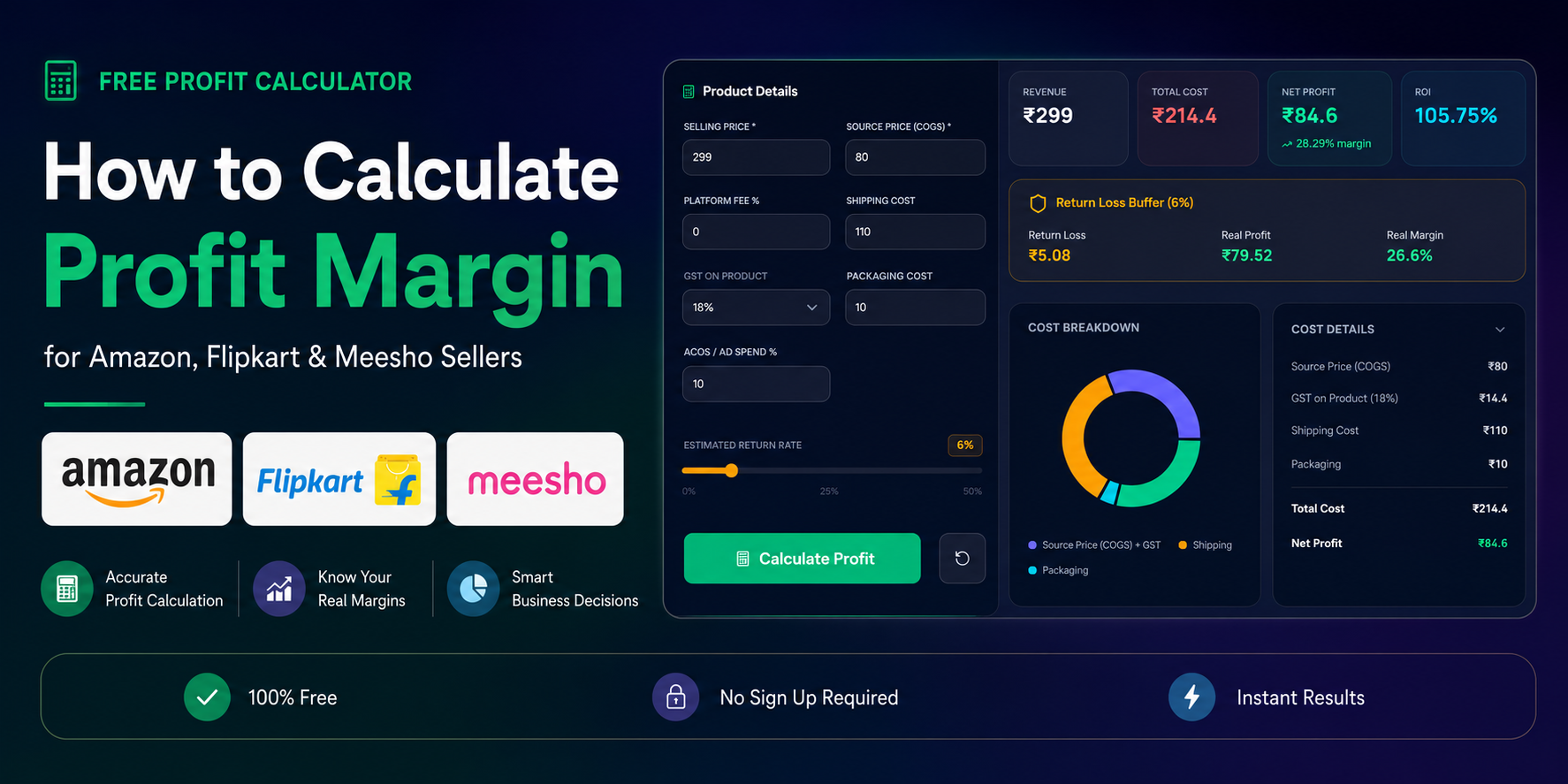
Meesho advertises 0% commission, yet logistics and return or RTO losses can still become the largest variable costs. Meesho shipping charges are system-generated, and sellers cannot edit them. That makes returns your main lever. ecomcalctoolsshiprocket
Here is an illustrative example with assumed numbers. If each RTO costs you ₹100 in shipping and packaging, 20 RTOs in 100 orders cost ₹2,000. That is ₹20 off every order you ship.
Add a return reserve to every price. It turns expected return and RTO losses into a planning cost per order. ecomcalctools
10 Ways to Reduce RTO and Return Losses
Fix the Listing
- Use accurate photos, colours and sizes. Show the product from several angles in natural light. Wrong expectations cause returns.
- Add a size chart with measurements. Sending an L instead of an M is a guaranteed return, so pick and pack carefully.
- Write honest titles and descriptions. Do not over-promise.
Check the Order
- Confirm that the buyer is genuine, especially on COD orders, within each platform’s rules on contacting buyers.
- Track RTO by pincode and flag high-risk areas.
- Test prepaid-first nudges before restricting COD. Disabling COD can significantly reduce your total orders, so measure the trade-off.
Pack and Ship Well
- Use strong packaging for fragile items, such as sealed boxes, bubble wrap and tamper-proof tape. Add a quality check before dispatch.
- Keep stock accurate and dispatch on time to avoid seller cancellations.
- Keep packing photos or videos as proof for damage disputes.
Use Your Data
- Review return reasons weekly by SKU, pincode and size. Use Flipkart Seller Hub to spot failing products, then fix or delist the worst ones.
Meesho vs Flipkart: Where to Focus to Reduce RTO
Track These Numbers Every Week to Reduce RTO
- RTO rate: RTO orders divided by shipped orders.
- Return rate by SKU.
- Top return reasons.
- Pincodes with high RTO.
- Net profit per order after returns. See our guide to calculating your real profit per order.
FAQ
How can I reduce RTO on Meesho?
Improve sizing clarity and product accuracy, track risky pincodes and review return reasons every week.
What is a good RTO rate?
It varies by category and COD share. Compare your own weekly trend instead of chasing a single number.
Should I stop COD to reduce RTO?
Not always. Disabling COD may lower total orders, so test the effect before restricting it.
Are RTO and customer returns the same?
No. RTO happens when delivery fails, while a customer return happens after delivery.
How do I protect pricing from RTO and return losses?
Add a return reserve to each product’s cost and recheck it monthly against actual data.
How soon can I see results?
Listing and sizing fixes can show up in your weekly numbers within a few weeks. Track the same metrics every week so you can see what worked.